It’s been a long time since I’ve updated, and lots has happened! We moved the bees on August 5th from the horse farm in Corcoran to their new home in Independence, MN. It was a giant, sweaty, painful, and long ordeal. George, Liam, Dave, and Guy (to whose property they went) did the heavy lifting and got the most stings. I ended up with one on my scalp, but Dave and George were covered in stings by the end, with well over a dozen apiece. (After a while, they lost count.) We started at 7:00 in the evening, after the bees were finished foraging for the day and were all back in their hives, and we ended at about 2:30 the following morning. It was not a fun experience.
Now that they’re at Guy’s, the bees seem to be adjusting nicely. Their numbers don’t seem to have decreased any, although the honey production has slowed. That’s probably more the fault of summer’s end than the move, though. Within the next couple of months, Guy would like us to move them again, from their current location to a different location on his property. We will wait until all the honey is harvested and the supers are all off, and then we will move them. We’re really hoping that this time goes more smoothly.
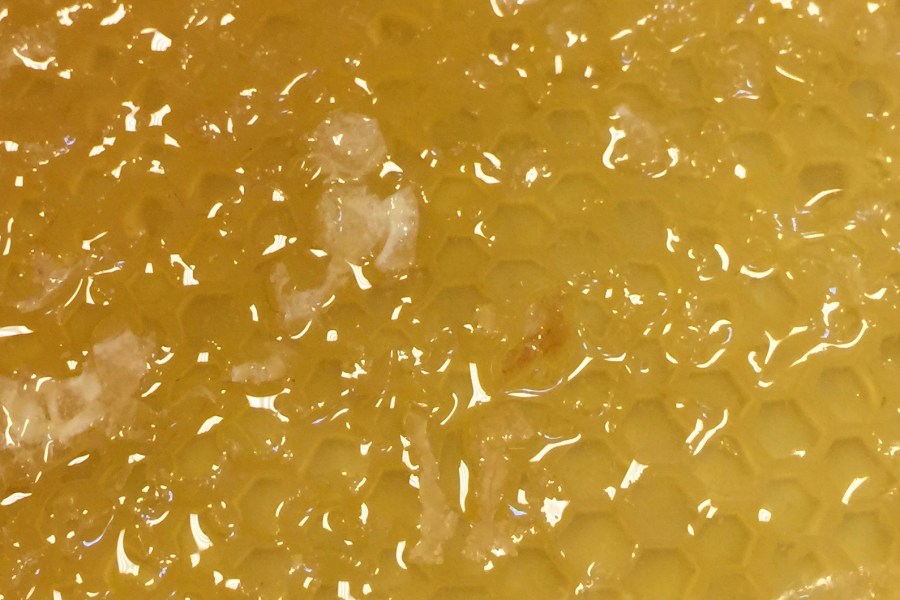
Speaking of removing supers, we took 4 of them to the Beez Kneez and completed our first honey harvest a couple of weeks ago, ending up with 110 pounds of honey! That amounts to about 11 gallons! This is our 4th year of beekeeping, and our total harvests have increased dramatically each year: Year one, none; year two, 17.5 pounds; year three, 77 pounds; and this year, 110 pounds (plus a little more in the end)! I have ordered bottles and will start getting the honey ready for sale soon. I’m also going to clean all the wax I collected and attempt to make candles. We will have one more small harvest in mid-October that might get us another 10-15 pounds of honey and a bit more wax if we’re lucky.
All of the hives except one are basically ready for winter, completely stocked with dozens of pounds of honey and pollen per hive. Soon, the bees that hatch will be “winter bees,” meaning that instead of the usual several-week lifespan of a honeybee, they will live several months in the hives, keeping the queen warm until spring, and only leaving the hive to defecate. When spring comes, the queen will start producing regular bees once again, that will only live a few weeks each.
 Tenacious Bee